


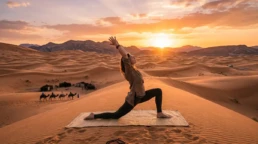
Yoga in the Moroccan Desert: a sensory journey from Marrakech to the dunes of Erg Chebbi
Morocco is not simply a destination, but a transformative experience. From October 7th to 14th, I invite you to unplug from the daily hustle and bustle to join a special journey: a path that will take us into the heart of the desert, starting from vibrant Marrakech, to rediscover a deep connection with ourselves through the practice of yoga.
If you feel the need to let your soul breathe, slow down the pace, and rediscover a sense of union and freedom, this is the itinerary you have been looking for.
The Beginning of the Journey: The Enchantment of Marrakech and the Embrace of the Atlas Mountains
Our journey will begin in the Medina of Marrakech. Long a crossroads of trade routes, cultures, and religions, this ancient city will welcome us with its overwhelming energy. Walking through its narrow alleys, immersed in an unforgettable mix of scents, colors, and people, we will begin to open ourselves to a different reality, letting go of old mental habits. Everything here blends and finds its place.
Leaving the Medina, we will set off toward the desert, crossing the majestic Atlas Mountain range. It is this very journey that will kickstart our transformation. The surrounding wild nature, with its landscapes shifting from gray to deep red, will guide us step by step, easing our return to our most natural and authentic self.
In the Heart of the Desert: Where Yoga Meets the Infinite
Once we arrive among the dunes, we will finally leave everything familiar behind. In the desert, time stands still: there are no deadlines, no performances to achieve. We will wake up to greet the sunrise and let ourselves be enchanted by the sunset, rediscovering the beauty of natural rhythms.
The heart of the experience will be practicing yoga among the dunes:
- Total Connection: Practicing with the sand beneath your hands and the infinite horizon before your eyes will immerse you in the perception of being at one with everything around you.
- Light Body and Breath: Freed from the pressures and expectations of daily life, your body will suddenly become softer, your muscles will relax, and your breath will finally become free.
- Union and Freedom: Together we will experience what it means to live in space and silence, bringing home a deep sense of inner peace.
Join us in October
I am truly happy to accompany you on this unique journey, designed for those who want to combine the cultural discovery of Morocco with a path of deep well-being.
The lands of Africa and the silence of the desert are waiting for us to remind us of who we are.

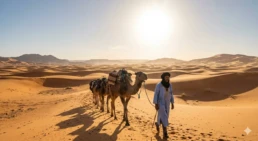
Traveling to Morocco in Summer
Summer is just around the corner, and many travelers are asking themselves the exact same question: “Can you travel to Morocco in June, July, and August without suffering too much from the heat?”.
The answer is absolutely yes. Although temperatures rise significantly in inland cities like Marrakech or in the Sahara Desert, Morocco is well-equipped for the sun. With the right precautions and a well-planned itinerary, your summer adventure will be unforgettable.
Here are 5 practical tips to make the most of your tour.
1. Follow the Local Rhythm: The Midday Rule
In imperial cities like Marrakech or Fez, summer doesn’t stop life; it simply shifts its schedule. Do as the locals do:
- Early Morning: Dedicate the first hours of the day (from 8:00 AM to 11:00 AM) to open-air monumental visits, such as historic palaces or gardens (Jardin Majorelle in Marrakech, for example, is perfect in the morning).
- The “Riad Break”: During the central hours of the day (from 12:00 PM to 4:00 PM), when the sun is at its peak, treat yourself to a break. This is the perfect time to relax in the cool patio of your Riad, perhaps taking a dip in the pool or enjoying lunch in the shade.
- The Evening Rebirth: After 5:00 PM, the air cools down and the cities come alive. Jemaa el-Fna Square in Marrakech is at its best right at sunset, when it fills with stalls, scents, and performances.
2. Choose the Right Fabrics (and Respect the Culture)
Ditch synthetic fabrics. For the Moroccan climate, your number one ally is linen or lightweight cotton.
- Wear loose, breathable clothing that covers your shoulders and knees. Not only will you be respectful of the local culture, but you will also protect yourself much better from the sun’s rays compared to wearing shorts and tank tops.
- Don’t forget a wide-brimmed hat, sunglasses, and a lightweight cotton scarf (a pashmina), which is incredibly useful both for protecting your neck from the sun and for the air conditioning in vehicles.
3. Integrate the Atlantic Coast into Your Itinerary
If you are traveling to Morocco at the beginning of summer, the secret to a perfect itinerary is balance. Make sure your tour includes stops along the Atlantic coast. Cities like Essaouira and Agadir enjoy an ocean breeze all year round, with temperatures in June rarely exceeding 25–28°C. Spending a few days here after visiting the interior will allow you to completely recharge.
4. How to Experience the Desert in Summer
Can you visit the Sahara in summer? Yes, but with the right logistics. Our tours are designed to bring you to the gateway of the Merzouga dunes in the late afternoon, when the sun is setting and the sand begins to cool down. The night in the desert holds a surprise: the summer temperature drop is extremely pleasant, and sleeping under the stars, with the clean air of the Sahara, is an experience that remains unaffected by the daytime heat.
5. Smart Hydration and Nutrition
“Berber Whisky” (the typical hot mint tea) is a natural thermoregulator, but during the day, bottled water must be your best friend. Avoid ice-cold drinks which can cause thermal shock, and opt for fresh, local summer cuisine instead. Fresh Moroccan salads (made with tomatoes, cucumbers, and peppers) and vegetable tajines are light and easy to digest.
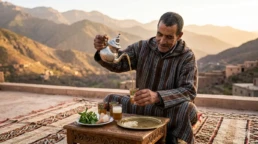
The Secret of "Berber Whisky": The History and Ritual of Moroccan Mint Tea
An Ironical Name, a Deep Symbol
If you travel to Morocco, the first thing you will be offered isn’t a key or a seat, but a glass of steaming hot tea. Often jokingly referred to as “Berber Whisky” because of its amber hue and its role as the primary (and strictly non-alcoholic) “toast” for any occasion, mint tea is the social glue of the country. From the peaks of the Atlas Mountains to the golden dunes of Merzouga, every cup tells a story of brotherhood and the luxury of slowing down.
The Art of Preparation: A Sacred Process
Preparing authentic Moroccan tea is not a hurried task. It requires patience and a specific sequence of gestures that constitute a true Maghrebi tea ceremony:
- The Rinsing: Green tea (typically the Gunpowder variety) is placed in the teapot with a small amount of boiling water to “wake up” the leaves and rinse away impurities. This first infusion, dark and bitter, is often discarded.
- The Union: Fresh, fragrant sprigs of mint (Nana) are added, followed by boiling water and a generous amount of sugar. In rural areas, you might still see sugar being broken directly from large, hard sugar cones.
- The Aeration: This is the most iconic moment. The tea is poured from the pot into the glass and then back into the pot two or three times. This process dissolves the sugar and creates the signature foam (la corona), which oxygenates the drink and showcases the host’s skill.
The Rule of Three
There is a famous Berber proverb that perfectly describes the evolving intensity of the tea you will drink:
“The first glass is as sweet as life. The second is as strong as love. The third is as bitter as death.”
Never rush away after the first sip. Accepting the second and third glass is a sign of great respect toward your host.
Health Benefits and Curiosities
Beyond its incredible flavor, mint tea is an excellent digestive and a natural temperature regulator. Paradoxically, drinking a hot beverage in the heart of the desert helps the body feel cooler than an ice-cold drink would. If you find yourself in southern Morocco during the winter, you might taste the “desert variant,” where other herbs like wormwood (Sheba) are added to provide warmth and protection against the cold.