


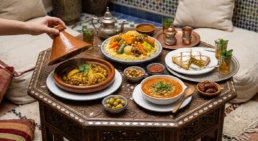
The Flavors of Morocco: 4 Must-Try Dishes You Can't Miss
Traveling to Morocco is not just an experience for the eyes, with its endless deserts, imperial cities, and colorful mosaic tiles. It is, above all, a journey for the palate. Moroccan cuisine is a magical blend of Berber, Arabic, and Andalusian influences, where spices are not used to make food hot, but to create harmonies of unforgettable flavors.
If you are planning your next trip with us at Maroccotour, here are the iconic dishes that will transform your holiday into a unique gastronomic experience.
The Tajine: The Undisputed King of the Table
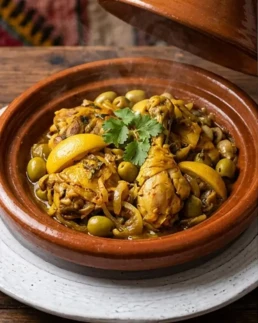
You can’t say you’ve visited Morocco without smelling a freshly opened Tajine. More than just a single dish, the tajine is a cooking method named after the typical earthenware pot with a cone-shaped lid.
Thanks to this unique shape, the steam rises, condenses, and falls back onto the food, making the meat so tender it melts in your mouth.
- The most popular variations: chicken tajine with preserved lemons and green olives, or the sweeter version with lamb, prunes, and toasted almonds.
- Fun fact: It is eaten strictly hot, dipping directly from the shared dish with the help of fresh bread (khobz).
The Couscous: The Friday Ritual
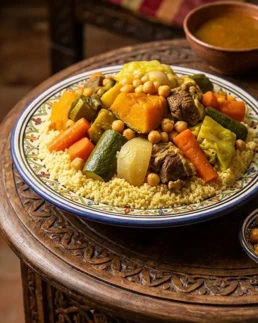
If the tajine is the daily king, couscous is the sacred dish of tradition. Made of fine grains of semola steamed for hours, it is traditionally served on Fridays (the Muslim holy day) after prayer, gathering whole families around a single large dish.
- How it’s made: The semolina is topped with a mountain of fresh vegetables (pumpkin, carrots, zucchini, turnips) and chicken or beef, all drizzled with a highly fragrant broth.
- The hidden gem: Try the Couscous Tfaya, a sweet and savory variation topped with caramelized onions, raisins, and a pinch of cinnamon. True poetry.
La Pastilla (Bastilla): The Sweet and Savory Masterpiece
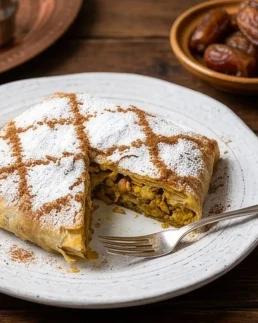
If you are looking for the dish that best represents the elegance of Moroccan cuisine, you have found it. The Pastilla is a treasure chest of paper-thin pastry (called warka) that encloses a contrast of flavors that will leave you speechless.
Traditionally prepared with pigeon meat (now more commonly replaced by chicken), it is enriched with chopped almonds, saffron, and eggs. The final magic? The top is dusted with powdered sugar and cinnamon. The first bite, suspended between sweet and savory, is an explosion of flavor that is impossible to resist.
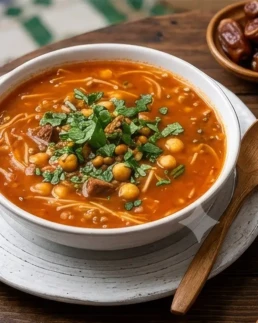
La Harira: The Warming Heart of Morocco
Often considered the national soup, Harira is a rich and nutritious dish made with a base of tomatoes, lentils, chickpeas, and meat (beef or lamb), scented with cilantro, parsley, and a shower of spices.
It is the symbolic dish of Ramadan, used to break the evening fast thanks to its incredible energy boost, but you will find it in markets and restaurants all year round. Pair it with local dates for a perfect contrast.
Our Tips for an Authentic Experience
To experience true Moroccan cuisine, avoid overly touristy restaurants. Immerse yourself in the alleys of the Medinas, follow the scent of spices, and look for small places frequented by locals. And, of course, never refuse a glass of mint tea (the “Berber whiskey“): it is the supreme symbol of Moroccan hospitality!

The Secret of "Berber Whisky": The History and Ritual of Moroccan Mint Tea
An Ironical Name, a Deep Symbol
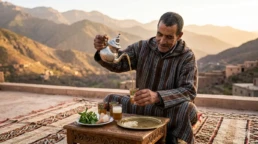
If you travel to Morocco, the first thing you will be offered isn’t a key or a seat, but a glass of steaming hot tea. Often jokingly referred to as “Berber Whisky” because of its amber hue and its role as the primary (and strictly non-alcoholic) “toast” for any occasion, mint tea is the social glue of the country. From the peaks of the Atlas Mountains to the golden dunes of Merzouga, every cup tells a story of brotherhood and the luxury of slowing down.
The Art of Preparation: A Sacred Process
Preparing authentic Moroccan tea is not a hurried task. It requires patience and a specific sequence of gestures that constitute a true Maghrebi tea ceremony:
- The Rinsing: Green tea (typically the Gunpowder variety) is placed in the teapot with a small amount of boiling water to “wake up” the leaves and rinse away impurities. This first infusion, dark and bitter, is often discarded.
- The Union: Fresh, fragrant sprigs of mint (Nana) are added, followed by boiling water and a generous amount of sugar. In rural areas, you might still see sugar being broken directly from large, hard sugar cones.
- The Aeration: This is the most iconic moment. The tea is poured from the pot into the glass and then back into the pot two or three times. This process dissolves the sugar and creates the signature foam (la corona), which oxygenates the drink and showcases the host’s skill.
The Rule of Three
There is a famous Berber proverb that perfectly describes the evolving intensity of the tea you will drink:
“The first glass is as sweet as life. The second is as strong as love. The third is as bitter as death.”
Never rush away after the first sip. Accepting the second and third glass is a sign of great respect toward your host.
Health Benefits and Curiosities
Beyond its incredible flavor, mint tea is an excellent digestive and a natural temperature regulator. Paradoxically, drinking a hot beverage in the heart of the desert helps the body feel cooler than an ice-cold drink would. If you find yourself in southern Morocco during the winter, you might taste the “desert variant,” where other herbs like wormwood (Sheba) are added to provide warmth and protection against the cold.
Berber Culture in Morocco: Authentic Tours to Discover the Amazigh
Who Are the Berbers (Amazigh) of Morocco?
History and identity of a thousand-year-old people
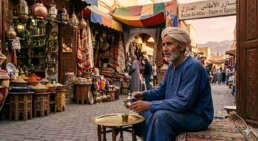
The Berbers, or Amazigh, are one of the oldest peoples of North Africa. Their culture is deeply connected to life in the mountains, villages, and desert, preserving languages, traditions, and values passed down through generations. With Maroccotour’s tours, you can discover the real Berber Morocco and enjoy authentic experiences in close contact with the local people.
Berber language and alphabets: Tamazight and Tifinagh
Learn Amazigh culture words during your trip
The Tamazight language and the Tifinagh script tell stories with deep meanings. On our tours, you can listen to the villagers’ stories, understand the significance of local expressions, and immerse yourself in a living linguistic culture that still shapes daily life today.
Berber Village Tours: Authentic Experiences
Walks, stays and cultural encounters with the Berbers
- Night in the desert with Berber families – Experience daily life, enjoy mint tea, and listen to stories around the fire.
- Trekking in the Atlas Mountains – Meet artisans, observe carpet weaving, and discover traditional techniques.
- Local Markets and Festivals – Experience cultural events that showcase the true Amazigh spirit.
Each tour is designed to let you experience Berber culture firsthand, not just observe it.
Berber Music, Dance and Traditions
Discover the emotions of Amazigh culture through sounds and movements.
Berber music accompanies rituals and celebrations, with traditional instruments such as the bendir and the ghaita. Collective dances like ahidous and ahwash reflect community life and ancestral values—experiences you can directly enjoy on our cultural tours.
Berber Art and Crafts: Carpets, Jewelry, and Symbols
A unique artistic heritage to explore in the Berber villages
Berber rugs, silver jewelry, and traditional ceramics are expressions of identity and symbolism. On our itineraries, you’ll have the opportunity to meet local artisans and discover how these creations tell stories of tribes and legends.
Hospitality and Traditional Berber Cuisine
Mint tea, couscous, and tagine in Amazigh villages
Berber hospitality is an experience to cherish: sharing a meal or a mint tea is a profound gesture of welcome. On Maroccotour’s tours, you can enjoy traditional dishes made with fresh ingredients and discover the rituals that accompany each gathering.
Amazigh Festivals and Celebrations Not to Miss
Yennayer, Imilchil Festival and other cultural experiences
- Yennayer – Amazigh New Year, a time of celebration and agricultural tradition.
- Imilchil Festival – Wedding celebrations and community gatherings.
Joining these celebrations with Maroccotour’s tours means experiencing unique and immersive events, far from the standard tourist circuits.
Why Choose a Berber Cultural Tour with Maroccotour?
Authentic experiences, local guides and personalized itineraries
- Customizable tours according to interests and time available
- Authentic encounters with Berber families, artisans, and communities
- Expert local guides who explain history, traditions and symbols
- Real immersion in Amazigh culture, beyond the simple scenic journey
Traveling with Maroccotour means discovering the heart of Morocco, immersing yourself in the life of Berber communities, and taking home an unforgettable experience.